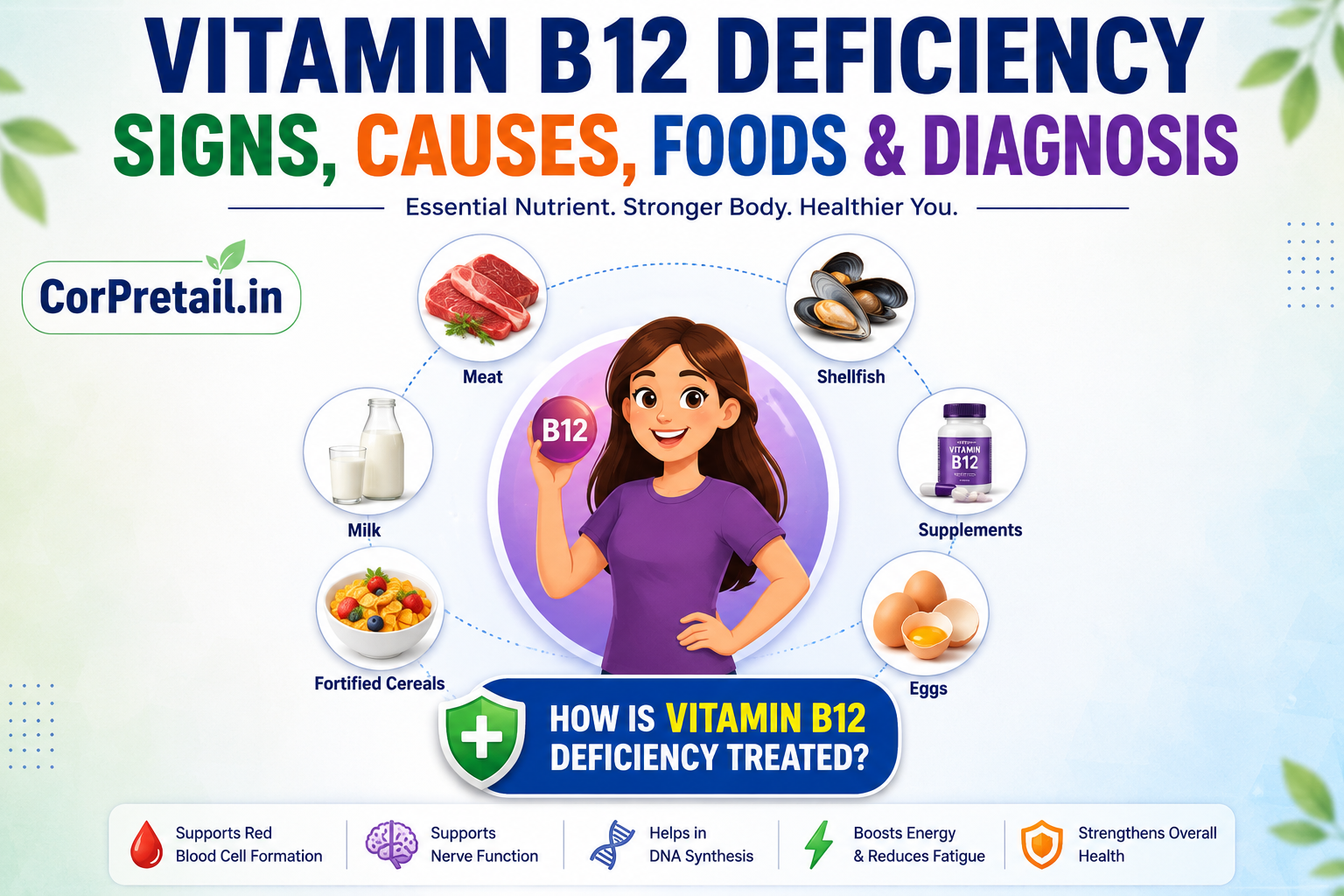
Vitamin B12 is an essential nutrient for our body; it aids in the production of red blood cells, supports nerve function, and helps in the synthesis of DNA. Our body cannot produce Vitamin B12 on its own, so we must ensure a proper diet or use supplements to obtain it. A deficiency in Vitamin B12 can lead to fatigue, weakness, and nerve-related issues; however, early detection allows for prompt treatment.
In this article, we will explore why Vitamin B12 is vital for our body.
What Is Vitamin B12 Deficiency?
A Vitamin B12 deficiency can occur when the body lacks sufficient levels of this nutrient. Vitamin B12 helps make our blood red and forms the structure of our nervous system. Deficiency often arises from an inability to absorb the vitamin effectively, which can be caused by long-term health conditions or the prolonged use of certain medications.
Vitamin B12 Deficiency Symptoms
Common symptoms include:
- Tiredness and weakness
- Low energy
- Pale or yellowish skin
- Headache
- Dizziness
- Shortness of breath
- Fast heartbeat
- Loss of appetite
- Unexplained weight loss
- Difficulty concentrating
- Memory problems
- Mood changes
- Numbness or tingling in the hands and feet
- Muscle weakness
- Balance problems
- Sore or swollen tongue
- Mouth ulcers
What Causes Vitamin B12 Deficiency?
There are several reasons for vitamin B12 deficiency: these reasons may be different in some people.
Lack of Vitamin B12 in the Diet
A Vitamin B12 deficiency occurs when one does not consume foods rich in this vitamin; therefore, we should eat nutritious food and use supplements if necessary.
Poor Vitamin B12 Absorption
The body’s digestive system requires Vitamin B12, and a deficiency can lead to various digestive issues.
Pernicious Anemia
Pernicious anemia is an autoimmune condition that makes it difficult for the body to absorb Vitamin B12 from the food we eat.
Older Age
Elderly individuals often experience a Vitamin B12 deficiency because, as we age, the digestive system’s efficiency tends to decline.
Foods Rich in Vitamin B12
Good sources include:
- Fish
- Meat
- Chicken
- Eggs
- Milk
- Yogurt
- Cheese
- Shellfish
If someone does not consume animal-based products, they can consult a healthcare professional to find out which foods are rich in Vitamin B12 and ask about supplements.
Who Is at Risk of Vitamin B12 Deficiency?
People at higher risk may include:
- People following a strict vegan diet
- Older adults
- People with certain digestive conditions
- People with pernicious anemia
- People with conditions affecting nutrient absorption
- People taking certain medicines for a long period
If you are experiencing any health issues, it does not necessarily mean you have a Vitamin B12 deficiency; this can only be confirmed after getting tested by a qualified healthcare professional.
Vitamin B12 Deficiency Tests
Common tests may include:
- Vitamin B12 Blood Test: It analyzes our blood and checks for symptoms, while also taking into account the results of other tests.
- Complete Blood Count (CBC): Diagnostic use: It is used to analyze blood cells individually; Vitamin B12 deficiency leads to anemia and enlarged blood cells.
- Homocysteine Test: When levels of Vitamin B12 or folate drop, homocysteine levels can rise; this test is often performed alongside other tests.
- Additional Tests: When there is a problem in the absorption of nutrients in our body or pernicious anemia, then the health care provider may ask for tests to know the real reason.
Conclusion
Today, we discussed the benefits and side effects of Vitamin B12. To reiterate, a deficiency in Vitamin B12 can lead to fatigue, stress, and a tingling sensation in the body. If you notice such symptoms, consult a healthcare professional to check for a deficiency. If you are found to be deficient, you should adjust your diet; you can consume foods like fish, eggs, and meat. If you are a vegetarian, you can include paneer, green vegetables, milk, and yogurt in your diet. Vitamin B12 supplements are also available, but they should only be taken upon a doctor’s advice.