In today’s world, people often fail to pay adequate attention to their bodies, which increases the risk of developing various illnesses. Therefore, it is essential to consult a doctor and undergo medical tests; this ensures that if a disease is present, it receives the correct treatment and the risk of it spreading is eliminated. If certain symptoms appear in the body,
they may indicate an underlying condition that requires a proper diagnosis—something that is only possible through medical testing. Without tests, a doctor might simply prescribe medication with the assurance that you will recover, but true recovery depends on administering the right medicine based on an accurate diagnosis of the specific illness. That is why testing is crucial.
In today’s article, we will discuss how to avoid the need for such diagnoses by focusing on prevention.
What Is a Medical Diagnosis?
Medical diagnosis involves identifying a disease or an underlying cause so that appropriate treatment can be administered. Healthcare professionals may ask you about your symptoms and medical history.
Diagnosis can help doctors:
- Identify possible diseases or health conditions.
- Understand the cause of symptoms.
- Determine how serious a condition may be.
- Choose an appropriate treatment.
- Monitor changes in an existing condition.
- Check whether treatment is working.
- Detect certain health problems at an early stage.
Whenever you exhibit various symptoms, you do not necessarily require a multitude of medical tests; your treatment is determined based on your symptoms and medical history.
Why Are Medical Tests Important?
Medical tests may be recommended for different reasons, including:
- Investigating unexplained symptoms.
- Confirming or ruling out a suspected condition.
- Screening for certain diseases.
- Monitoring a chronic health condition.
- Checking organ function.
- Evaluating treatment response.
- Preparing for certain medical procedures.
Once the test is done and the results are available, show them to a doctor or healthcare professional; they are the ones who can explain the results to you.
Common Types of Medical Tests
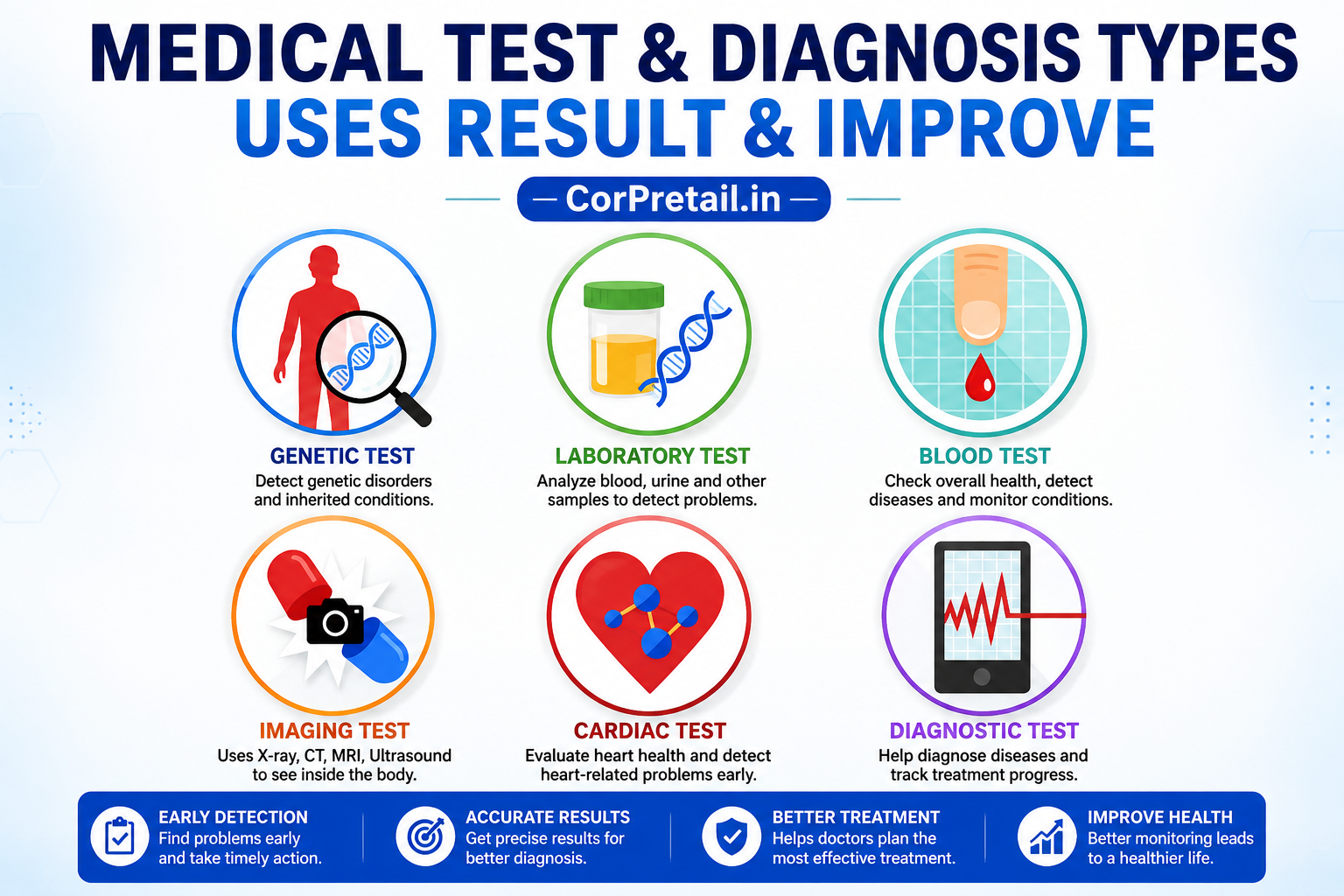
Various medical tests are conducted based on different medical conditions; while many are simple and routine, others require specialized equipment.
1. Blood Tests
Depending on the test, blood work may provide information about:
- Red and white blood cells.
- Blood sugar levels.
- Cholesterol and triglycerides.
- Kidney function.
- Liver function.
- Certain vitamins and minerals.
- Hormone levels.
- Signs of infection or inflammation.
When any abnormality is seen in the blood, the doctor may order a blood test.
2. Urine Tests
A urine sample is analyzed to assess the urinary system and gain an accurate understanding of the conditions affecting it.
3. Imaging Tests
Common imaging tests include:
- X-rays.
- Ultrasound.
- CT scans.
- MRI scans.
- Mammography.
An imaging test is performed when the specific location of the disease is already known.
4. Stool Tests
Each milliliter of the sample is analyzed to detect specific abnormalities and identify issues related to digestion; doctors may recommend this test if you have an infection.
What Happens During the Diagnosis Process?
Whenever you fall ill, the testing process varies depending on the condition.
Medical History
The doctor may ask about your symptoms, the medications you are currently taking, and your medical history.
Doing so can help the doctor treat the illness more effectively.
Physical Examination
Whenever a physical examination is conducted, checks for blood pressure, heart rate, breathing rate, and body temperature are included; if other symptoms are present, they are examined as well.
Medical Testing
When further information is needed, the doctor may recommend imaging or diagnostic procedures.
Reviewing Results
When the test is done, a professional healthcare professional will perform the examination and evaluate the disease.
Understanding Medical Test Results
Results can be influenced by several factors, including:
- Age.
- Sex.
- Medications.
- Diet.
- Physical activity.
- Timing of the test.
- Existing health conditions.
- Laboratory methods.
Whenever you do not understand such results, consult a healthcare professional; they will be able to explain them to you accurately.
How to Prepare for a Medical Test
Before a test, ask your healthcare provider:
- Do I need to fast?
- Can I take my regular medicines?
- Should I avoid certain foods or drinks?
- Do I need to avoid exercise?
- When and how will I receive the results?
- Do I need to bring previous medical reports?
Things should be properly taken care of right now so that everything remains in good condition.
When Should You See a Doctor?
If symptoms persist or worsen, they can interfere with your daily activities; therefore, you should consult a healthcare professional to address the issue. Some symptoms require immediate testing, especially if the severity increases suddenly.
Whenever you notice serious symptoms, do not rely on online videos—doing so carries the risk of spreading the illness—so it is best to seek advice directly from a doctor regarding the condition.
consultation
Today, we learned about medical testing and why it is essential for diagnosis. I want to reiterate that these tests help identify any underlying illnesses in the body, allowing treatment to begin promptly. Whenever you undergo a test and receive the results, make sure to show them to a doctor or healthcare professional; they can provide an accurate interpretation, which facilitates the treatment process.