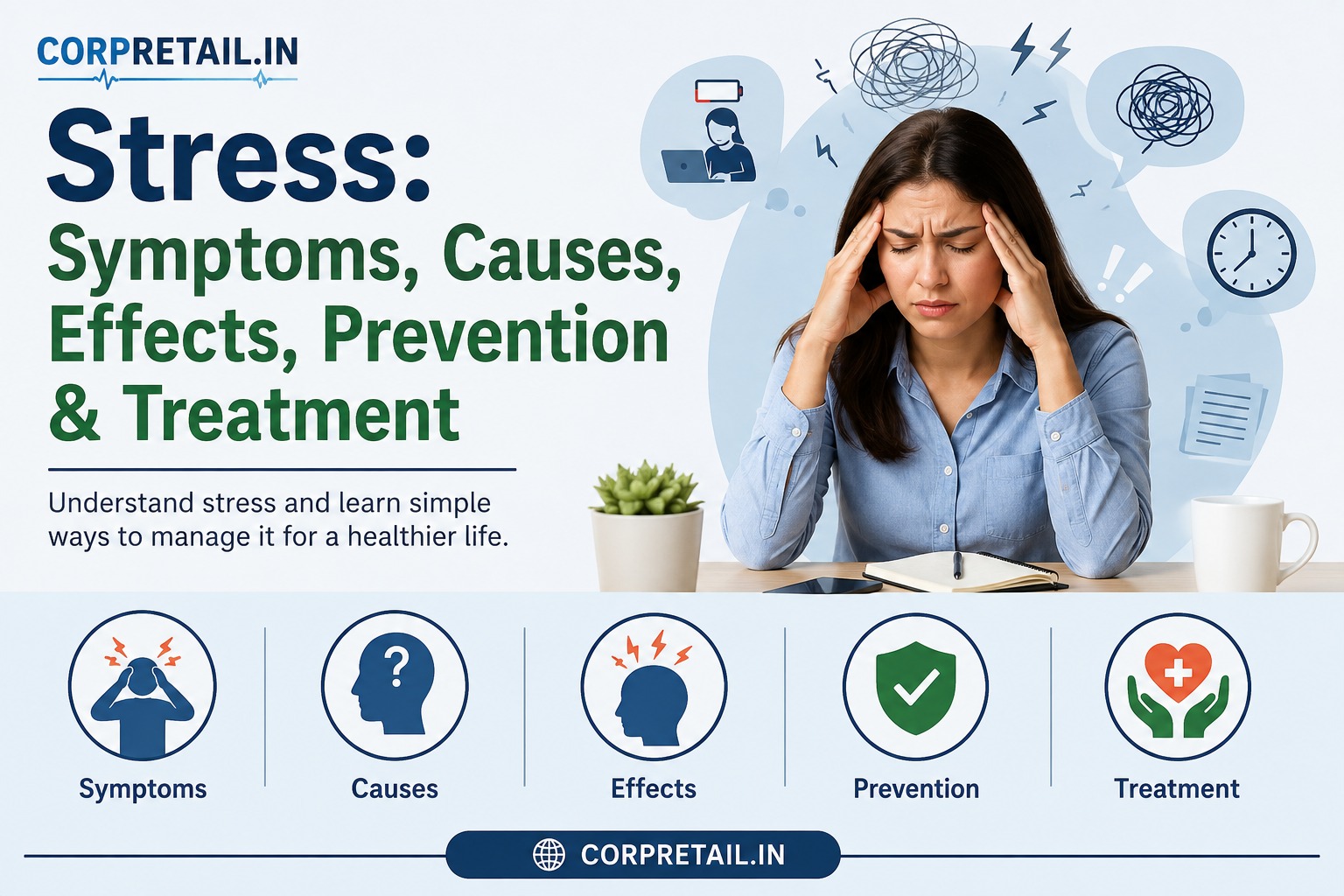
In today’s fast-paced world people often find themselves short on time and fall victim to stress. Stress can stem from anything that keeps us constantly on the run—whether it is the pressure of schoolwork for children, job-related stress, or the anxiety caused by overthinking various matters. These factors have become major causes of stress, and the average person is struggling with it. That is why I advise against excessive thinking that leads to increased stress; you need to change your lifestyle to effectively avoid it.
Today, we will discuss stress—what causes it and how to prevent it.
What Is Stress?
Stress is considered a part of our body’s mental functioning; it can make it difficult to focus on any task. Stress can arise from various factors—such as worrying about specific issues or fretting over life’s problems. Whenever you feel stressed, try to calm yourself down; practicing meditation in the morning can help soothe the mind. If stress persists for days or weeks, it can negatively impact your health, so it is advisable to consult a doctor.
Common Symptoms of Stress
Stress can affect the body and emotions, but these symptoms appear in only a few people.
Physical Symptoms of Stress
Physical symptoms may include:
- Headaches
- Muscle tension
- Neck or shoulder discomfort
- Tiredness
- Difficulty sleeping
- Changes in appetite
- Stomach discomfort
- Sweating
- Fast heartbeat
- Feeling restless
- Low energy
These symptoms are not necessarily caused by stress; they can also stem from various health-related reasons.
Emotional Symptoms
You may experience:
- Irritability
- Frustration
- Nervousness
- Constant worrying
- Feeling overwhelmed
- Difficulty relaxing
- Low motivation
- Feeling unable to cope
- Mood changes
If these feelings persist and interfere with your daily life, you can seek help from a professional.
Cognitive Symptoms
Some people experience:
- Difficulty concentrating
- Forgetfulness
- Racing thoughts
- Trouble making decisions
- Negative thinking
- Constantly thinking about problems
When you are stressed, you cannot focus on the task you are doing.
Behavioral Symptoms
You might:
- Avoid responsibilities
- Withdraw from friends or family
- Sleep much more or less than usual
- Eat more or less than usual
- Lose interest in activities
- Become less physically active
- Have difficulty completing everyday tasks
If you understand this, it will help you manage stress.
How to Manage Stress
There is no single way to end love, different situations have to be adopted for love.
1. Get Regular Physical Activity
You can choose activities such as:
- Walking
- Cycling
- Swimming
- Stretching
- Yoga
- Dancing
- Strength exercises
It’s not as if you need to do strenuous exercises. I’ve suggested this simple routine; if you follow it, you won’t have to exert yourself too much, and your body will stay in good shape.
2. Maintain a Healthy Sleep Routine
Helpful habits may include:
- Keeping your sleeping area comfortable
- Limiting unnecessary screen use before bed
- Avoiding very heavy meals close to bedtime
- Creating a relaxing bedtime routine
- Keeping a regular sleep schedule
If you are not sleeping well and this persists for a long time, consult a healthcare professional.
3. Take Short Breaks
You can:
- Stand and stretch
- Walk around
- Drink water
- Look away from the screen
- Take a few slow breaths
When you are working, you can take a short break to relax your mind.
4. Talk to Someone You Trust
Consider speaking with a trusted:
- Friend
- Family member
- Teacher
- Counselor
- Healthcare professional
How to Prevent Excessive Stress
Try to:
- Maintain a regular sleep schedule
- Stay physically active
- Eat balanced meals
- Organize your daily tasks
- Set realistic goals
- Take regular breaks
- Maintain supportive relationships
- Make time for hobbies
- Avoid unhealthy coping habits
- Ask for help when needed
If you understand the reasons behind the stress, you will be able to find a solution for it yourself.
When Should You Seek Professional Help?
If the problem is severe, consider consulting a doctor about seeing a physiologist or a specialist:
- Stress continues for a long time
- You regularly feel overwhelmed
- Sleep problems persist
- Stress affects your studies or work
- Relationships are being affected
- You are avoiding normal activities
- You find it difficult to manage everyday responsibilities
- You are experiencing persistent anxiety or low mood
A healthcare professional can determine whether your symptoms are related to stress or caused by another issue.
Consultation
Today, we have understood what causes stress and how to avoid it. Let me reiterate that stress often stems from overthinking and tension; therefore, avoid dwelling on things or stressing over matters. Instead, practice daily meditation and exercise, maintain a healthy diet, and adopt a good lifestyle. Most importantly, if you start feeling stressed and the feeling persists for days or weeks, make sure to consult a doctor.