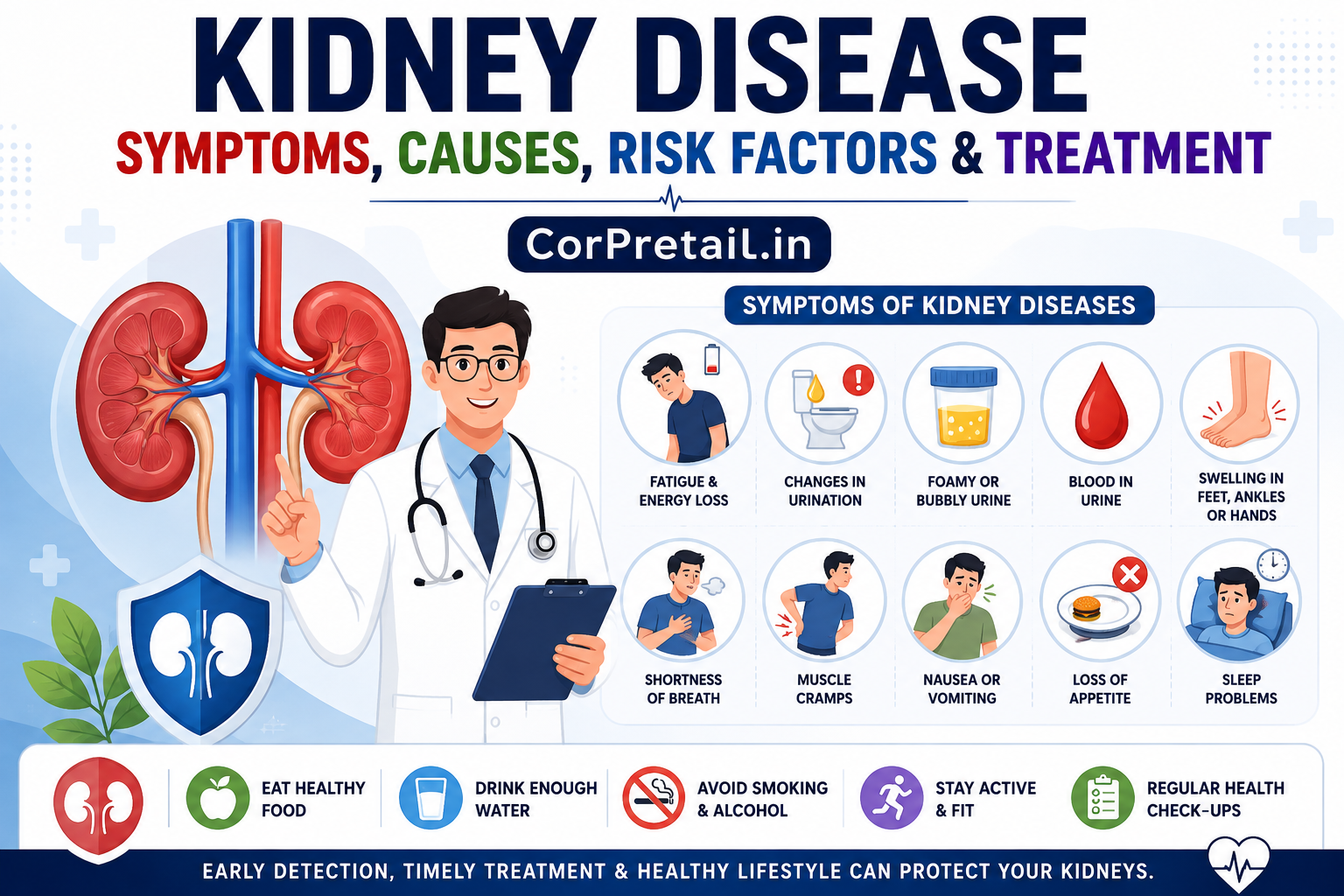
In today’s lifestyle, people often neglect their bodies and dietary habits, consuming unhealthy food that leads to unforeseen and serious illnesses—specifically, kidney disease. When affected, individuals may experience difficulties during urination, swelling, and the presence of impurities in the blood. Kidney disease often shows no early symptoms; it is usually detected only during a medical checkup. If symptoms do appear, it is crucial to seek medical treatment immediately to prevent the condition from worsening.
Today, we will discuss kidney disease and how it can be treated once it develops.
What Is Kidney Disease?
When kidney disease develops, it first affects the structures that support kidney function before damaging the kidneys themselves. A healthy kidney filters the blood and expels waste products from the body through urine; however, if the kidneys fail to function properly, excess fluids can accumulate. Kidney disease can range from mild to severe, so it is important to seek medical treatment as soon as possible.
Common Symptoms of Kidney Disease
Possible symptoms include:
- Swelling around the ankles, feet, or hands
- Changes in how often you urinate
- Foamy or unusually bubbly urine
- Blood in the urine
- Tiredness or weakness
- Difficulty concentrating
- Dry or itchy skin
- Muscle cramps
- Poor appetite
- Nausea or vomiting
- Sleep problems
- Shortness of breath, particularly when fluid builds up
These are symptoms of the disease; however, this does not mean that these symptoms are exclusively related to the kidneys.
Causes of Kidney Disease
There are certain factors that can damage the kidneys.
1. Diabetes
Diabetes has an adverse effect on the liver, as it also impacts blood pressure.
2. High Blood Pressure
High blood pressure impacts the liver; it is harmful to blood vessels and also causes damage to the liver.
3. Kidney Infections
A kidney infection has an adverse effect on the kidneys, and a delay in treatment can cause further damage.
4. Kidney Stones
When kidney stones form, urinary problems can occur; if the issue persists, the condition can become even more serious.
Risk Factors for Kidney Disease
Important risk factors include:
- Diabetes
- High blood pressure
- Heart disease
- Family history of kidney disease
- Older age
- Obesity
- Smoking
- Previous kidney problems
- Certain inherited conditions
Having a risk factor does not mean that kidney disease will definitely develop, but it may make regular health monitoring more important.
Treatment of Kidney Disease
Proper treatment can only be administered once the kidney disease is diagnosed; the treatment approach is determined by assessing the extent of kidney damage and the presence of complications.
Control Blood Pressure
If the cause of kidney problem is blood pressure: Then you can consult your doctor for medicine and improve your lifestyle.
Manage Diabetes
Diabetic patients should keep their blood sugar levels under control to avoid adverse effects on the kidneys.
Medicines
When we have blood pressure problem or some other disease then the doctor may ask for medicine for your problem.
Regular Physical Activity
There are many illnesses you could potentially develop, but if you lead a healthy lifestyle from the start—engaging in regular physical activity—you can prevent future problems.
How to Protect Kidney Health
You can take several steps to support kidney health:
- Keep blood pressure under control.
- Manage diabetes if you have it.
- Avoid smoking.
- Maintain a healthy weight.
- Stay physically active.
- Follow a balanced diet.
- Limit excessive salt intake.
- Take medicines only as directed.
- Avoid unnecessary use of potentially kidney-harming medicines.
- Drink fluids according to your healthcare professional’s advice.
- Get kidney tests if you have important risk factors.
When Should You See a Doctor?
If you experience difficulty urinating, swelling, or abdominal pain, you should consult a doctor or healthcare professional; additionally, getting examined after discussing your condition with a doctor—especially if you have diabetes, heart disease, or high blood pressure—can be highly beneficial.
Conclusion
Today, we learned about kidney disease—specifically, why it occurs and how it can be prevented. To reiterate, kidney disease impairs the body’s ability to eliminate waste; high blood pressure and diabetes are primary risk factors, and the condition can also be influenced by other ailments. Often, kidney issues do not show obvious symptoms, so you should still get regular check-ups. If you notice any signs of a kidney problem, seek medical treatment and make lifestyle changes to minimize the risk of developing the disease.