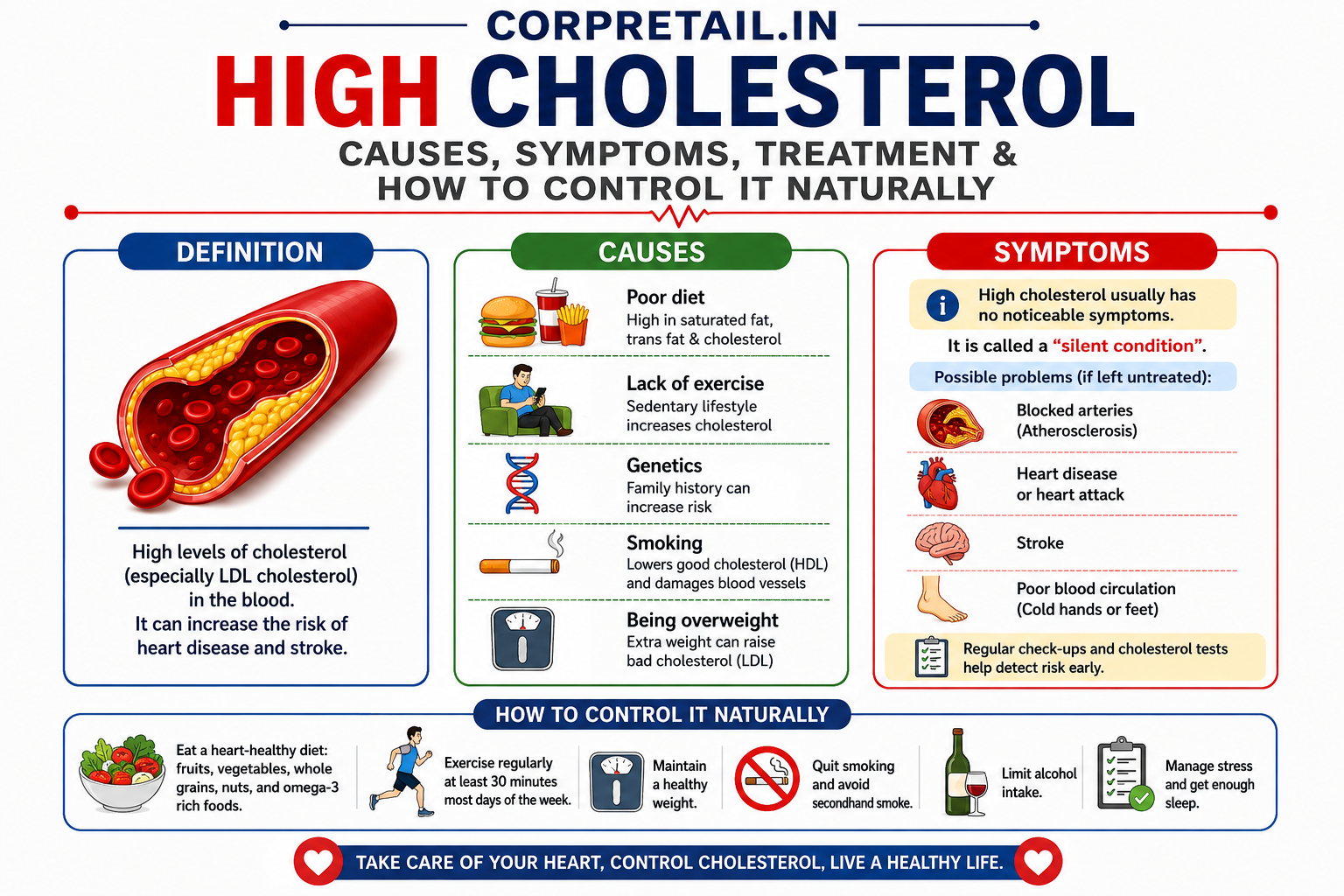
In today’s lifestyle, people often neglect their health and face various ailments sometimes, even after being diagnosed with a condition, they remain unaware of its implications. One such condition is high cholesterol. While it predominantly affects older adults and is not inherently life-threatening, it can become dangerous if left untreated.
In this article, we will explore what cholesterol is and how it is treated.
What Is Cholesterol?
You can consider cholesterol an integral part of our body; it is found in our blood cells and is a fat-like substance that also helps release hormones. However, it is important to note that while cholesterol is a natural part of the body, excessive levels can be harmful to our health.
Types of Cholesterol
When we get a cholesterol test done, we get to know about the cholesterol level of the patient.
1. LDL Cholesterol
A stroke can occur in a very small number of people. A stroke is a worsening of a disease such as a heart attack or stroke.
2. HDL Cholesterol
It is considered the correct approach because the blood is routed to the liver through this method.
3. Triglycerides
Triglycerides A is not a cholesterol factor but is also tested along with cholesterol.
4. Total Cholesterol
Health tests for the three types of cholesterol that fight heart and triglycerides.
Causes of High Cholesterol
High cholesterol can happen due to several different reasons:
1. Lack of Physical Activity
When we do physical activity, our cholesterol level decreases and we start gaining weight.
2. Being Overweight
Excess weight gain or obesity tends to keep LDL and triglyceride levels high while keeping HDL levels low; therefore, maintaining a healthy diet allows us to effectively manage both cholesterol levels and body weight.
3. Smoking
Excessive smoking impairs heart function, preventing adequate blood flow to the liver, which can lead to cardiovascular diseases.
4. Certain Medical Conditions
These may include:
- Diabetes
- Kidney disease
- Thyroid problems
Some divine remedies can help in correcting cholesterol
Risk Factors for High Cholesterol
There are certain factors that can make cholesterol unhealthy:
- Family history of high cholesterol
- Unhealthy diet
- Lack of regular physical activity
- Smoking
- Excess body weight
- Diabetes
- High blood pressure
- Certain kidney or thyroid conditions
- Increasing age
All these contribute to unhealthy cholesterol levels and you need to avoid them.
How High Cholesterol Is Diagnosed
The test commonly checks:
- Total cholesterol
- LDL cholesterol
- HDL cholesterol
- Triglycerides
Healthcare can tell you your age, blood pressure, diabetes history, smoking history, and family history.
How to Control Cholesterol Naturally
When our healthy life is good then cholesterol will also remain under control.
1. Eat a Balanced Diet
Eat more:
- Vegetables
- Fruits
- Whole grains
- Beans
- Lentils
- Nuts
- Seeds
When you eat soluble fiber, such as beans, nuts, or other fruits, your cholesterol levels remain healthy.
2. Exercise Regularly
You can choose activities such as:
- Walking
- Cycling
- Swimming
- Other moderate physical activities
By doing good exercises our cholesterol can be kept in constant control.
3. Maintain a Healthy Weight
You should never let your weight increase excessively, as this can lead to a further rise in cholesterol levels; therefore, try to maintain a healthy weight.
4. Avoid Smoking
You should not even smoke as it increases our cholesterol causing serious health problems.
When to Seek Medical Help
You should speak with a healthcare professional if:
- You have a family history of high cholesterol.
- You have diabetes or high blood pressure.
- You smoke.
- You have excess body weight.
- You have other cardiovascular risk factors.
We should get our regular medical checkup done, through this we can get information about our body.
How to Prevent High Cholesterol
This is a very healthy habit of ours that promotes healthy cholesterol:
- Eat a balanced and nutritious diet
- Exercise regularly
- Maintain a healthy weight
- Avoid smoking
- Limit excessive alcohol consumption
- Eat more fiber-rich foods
- Get regular health checkups when appropriate
- Follow your healthcare professional’s advice
You have structured your daily routine in a way that keeps our lifestyle healthy.
Conclusion
Today, we learned about cholesterol and how to keep it under control. I want to reiterate that healthy cholesterol is considered beneficial for the body, whereas unhealthy cholesterol is considered harmful. There are four types: LDL, HDL, triglycerides, and total cholesterol; these are identified during a healthcare check-up. Alright, now that everything is clear, please make sure to take good care of your body.