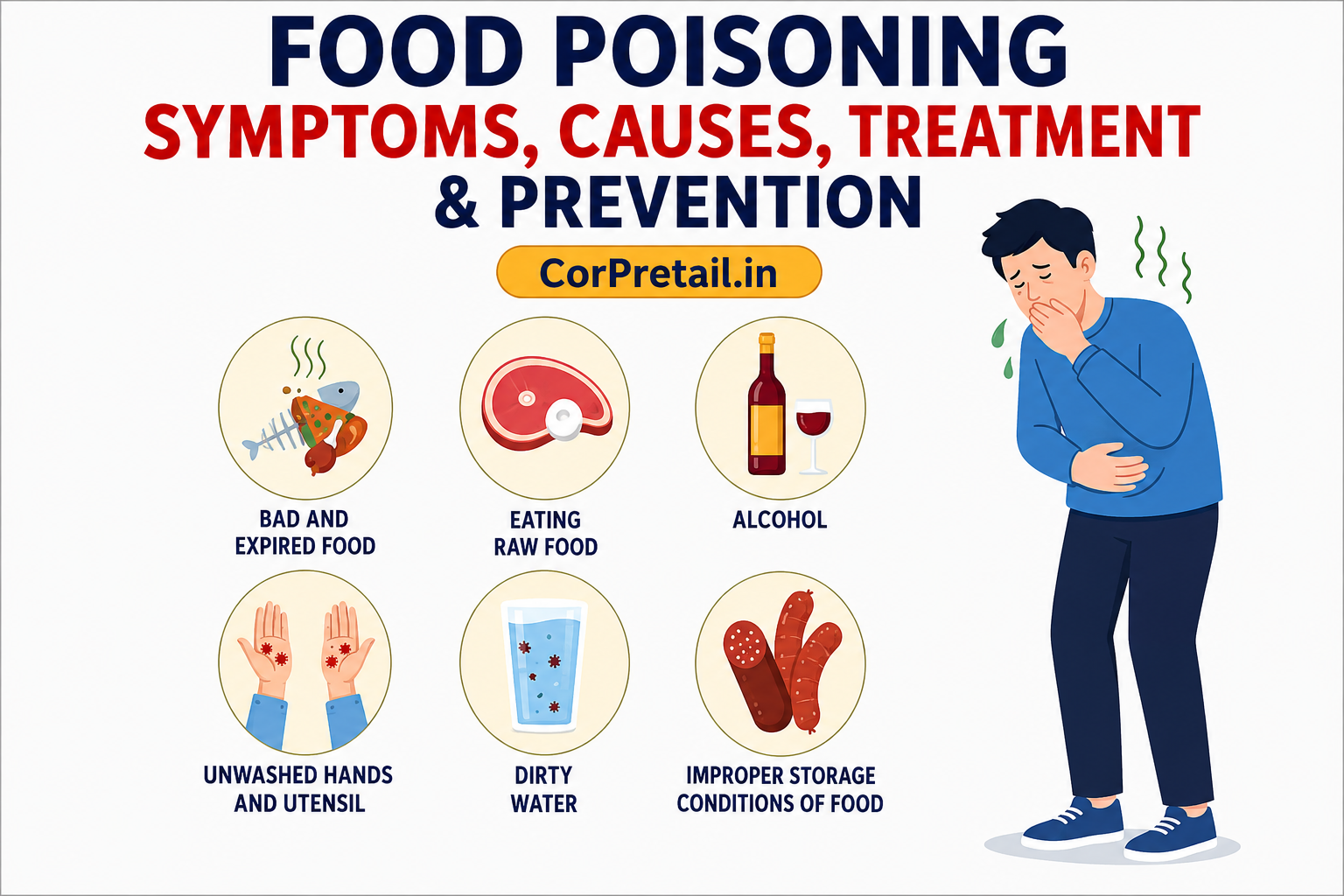
Food poisoning is often linked to the food we eat outside if that food is contaminated, it can cause illness. Food prepared outside is not always hygienic—it may be made in unsanitary conditions—making it harmful to our bodies. If you experience stomach pain or discomfort after eating outside food, consult a doctor immediately and inform them about what you ate; this helps in getting the right treatment and allows your body to recover.
In this article, we will discuss poisoning and explore ways to prevent food poisoning.
What Is Food Poisoning?
We can get food poisoning from consuming spoiled food or contaminated water. When we eat or drink outside, there is no guarantee that the food is prepared hygienically; many people use unclean water to wash vegetables, and the quality of the ingredients may also be poor. These factors can lead to stomach pain or vomiting—a condition known as food poisoning.
Common Symptoms of Food Poisoning
Common symptoms include:
- Nausea
- Vomiting
- Diarrhea
- Stomach cramps or abdominal pain
- Fever
- Weakness and tiredness
- Headache
- Loss of appetite
- Dehydration
These symptoms can appear quickly in many people, while in others, they may take a long time to show up.
When Should You See a Doctor?
Seek medical attention if you experience:
- Bloody diarrhea
- Severe or persistent vomiting
- Severe abdominal pain
- High or persistent fever
- Severe dehydration
- Confusion
- Unusual weakness
- Difficulty keeping fluids down
Cases of food poisoning can be serious, so be sure to consult a doctor.
1. Nausea and Vomiting
Nausea is a symptom of food poisoning that often leads to repeated vomiting. Vomiting can cause dehydration, so make sure to keep drinking water at regular intervals.
2. Diarrhea
When we have diarrhea, our body begins to lose water; therefore, we should keep drinking water to stay hydrated.
3. Stomach Pain and Cramps
Food poisoning can cause stomach pain or cramps, and in severe cases, it can lead to serious illness.
4. Fever and Weakness
When we get food poisoning, we experience fever or weakness; this happens because the body loses fluids, leading to dehydration and subsequent weakness.
What Causes Food Poisoning?
Some common causes include:
Bacterial Contamination
We can get food poisoning due to the presence of human bacteria in the food we eat.
Viral Infections
Many infections can be contracted through human lime or food.
Contaminated Water
Drinking unsafe or contaminated water or using it for cooking vegetables can also cause food poisoning.
Foods That May Increase the Risk
some foods require extra care, including:
- Raw or undercooked meat
- Poultry
- Eggs
- Seafood
- Unpasteurized milk or dairy products
- Raw sprouts
- Cut fruits and vegetables that are not handled hygienically
- Foods that have been improperly stored
It is not that all these platforms are unsafe, if they are made properly and looked after, they are also beneficial.
Food Poisoning Treatment
When treating food poisoning, the priority is to keep the patient hydrated and stop the bowel movements.
Get Enough Rest
We should get proper sleep so that what we have eaten can be digested properly.
Eat Light Foods When You Can
We shouldn’t eat anything too heavy; the food should be very light so that we don’t get food poisoning.
Avoid Certain Foods and Drinks
Stop eating and drinking outside food, this is what has become the cause of food poisoning.
Medicines
If you are experiencing vomiting, do not take any medication on your own, as it could be harmful; consult a doctor before taking any medicine.
When Should You See a Doctor?
Seek medical attention if you experience:
- Bloody diarrhea
- Severe or persistent vomiting
- Severe abdominal pain
- Signs of significant dehydration
- High or persistent fever
- Confusion or unusual weakness
- Diarrhea that does not improve
- Difficulty keeping fluids down
Young children, the elderly, and pregnant women need to take precautions against this food poisoning.
Signs of Dehydration
Possible signs include:
- Very strong thirst
- Dry mouth
- Passing urine less frequently
- Dark-colored urine
- Dizziness
- Weakness
- Unusual tiredness
When we become severely dehydrated, we need medical help.
Conclusion
We know that food poisoning is harmful to the body it can lead to issues such as stomach pain, fever, diarrhea, dehydration, and infections like norovirus. We should take precautions and consume only clean, safe food to prevent this problem. If such symptoms appear, seek medical help immediately.